Environment
Beach Clean Up Fund
A community effort to reduce solid waste along the beaches of Malpaís, Carmen, Santa Teresa, Hermosa, and Manzanillo—repurposing recovered materials into valuable resources supporting circular economy initiatives.
Five days a week, a local team walks our beaches from Manzanillo to Malpaís, collecting the waste that tides and tourism leave behind. Led by Nicoya Peninsula Waterkeeper, the Beach Clean Up turns 80% of what it collects into recycled materials so it never returns to the ocean.
About the Beach Clean Up
The southern Nicoya Peninsula is home to some of Costa Rica's most beautiful coastline. But rapid tourism growth and limited waste infrastructure mean plastics, glass and other debris keep reaching our beaches.
Nicoya Peninsula Waterkeeper, a local grassroots nonprofit, launched the Beach Clean Up in 2022. The model worked so well that in 2025 the organization made it its flagship program.
The goal goes beyond a clean beach. Everything collected is sorted and sent where it can be reused, so the waste doesn't become ocean pollution again.
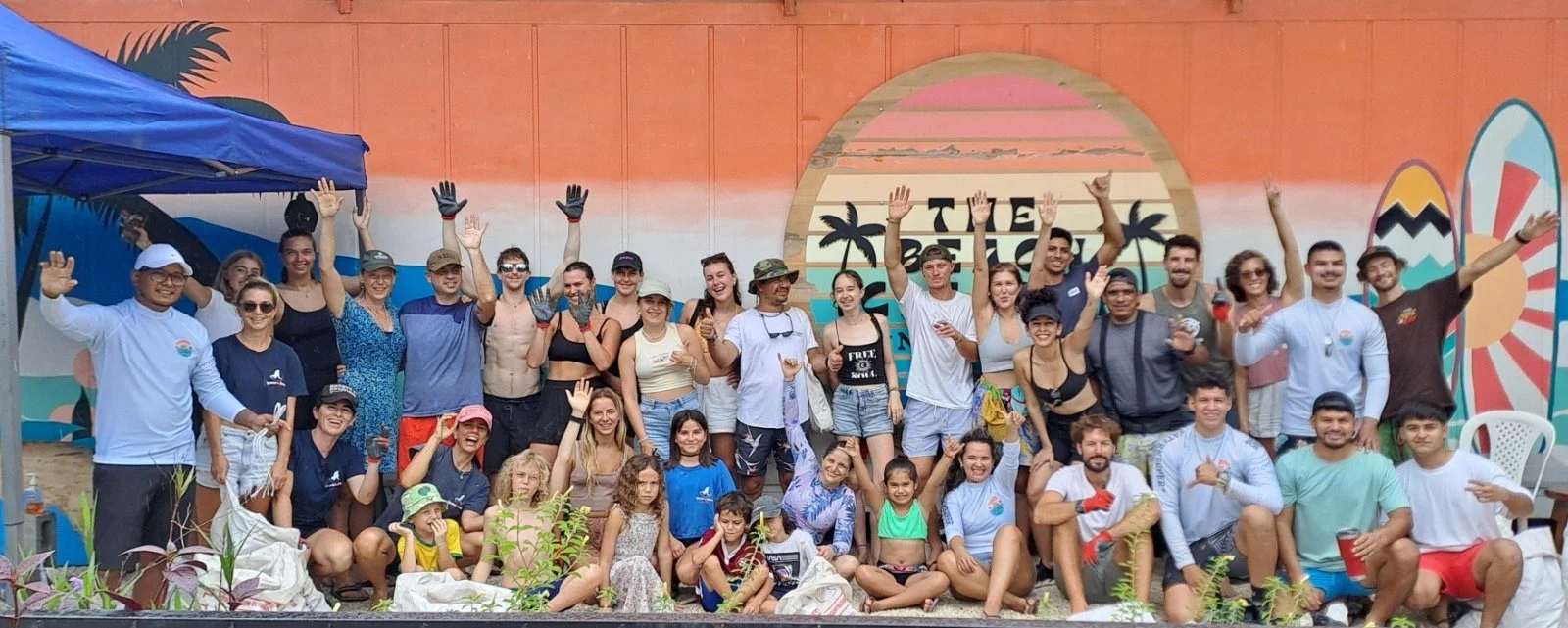
The work reaches well past the shoreline. Every week the team leads volunteer cleanups with groups of 15 to 80 people, bringing together neighbors and visitors from many countries. It also gives talks and training sessions to groups across the community, from beachfront property workers to local children and youth.
Our Process
How It Works
From beach to building material, our circular approach makes sure what we collect becomes something useful instead of landfill.
1
Collect.
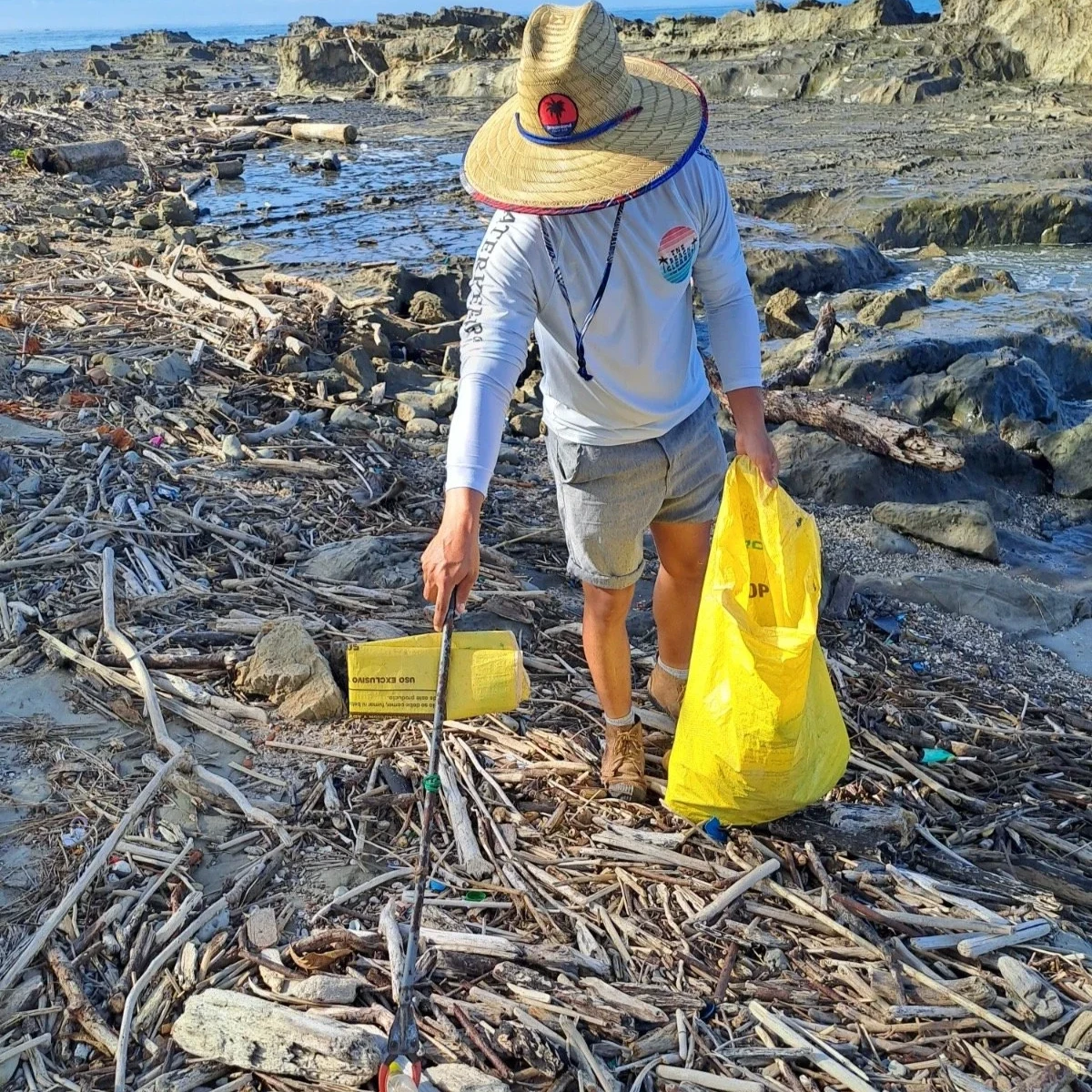
Five collectors operate Monday through Friday, 6:00 a.m. to 3:00 p.m., cleaning beaches from Malpaís to Manzanillo.
2
Sort and weigh.
Materials are sorted, weighed and stored at the Beach Clean Up Station.
3
Transform.
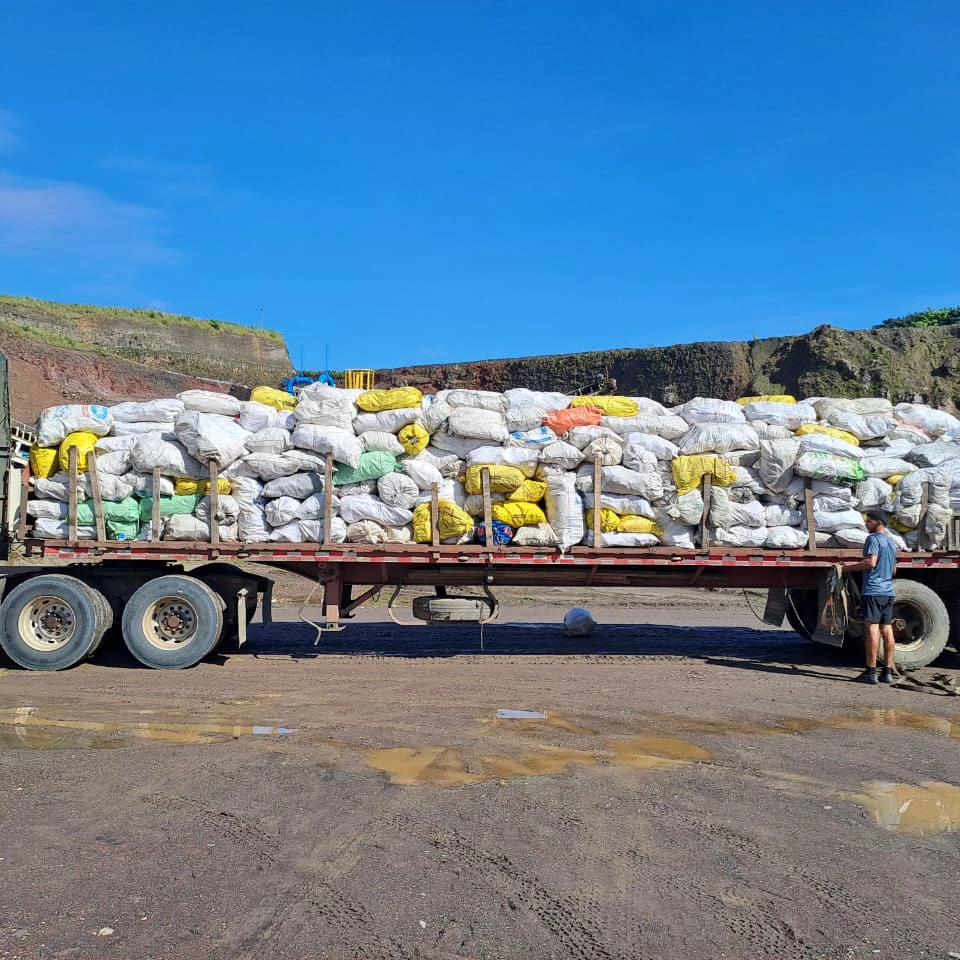
"Tragic plastics," the hard-to-recycle kind that would normally end up in a landfill, go to Grupo Pedregal in Heredia. There they become RESIN8, a synthetic sand made from 80% recycled plastic and used in construction materials such as blocks and road asphalt. In the past 12 months that was 6,695 kg, or 56% of everything collected.
4
Recycle.
Glass, aluminum, scrap metal and tires go through conventional recycling. Only about 20% of what we collect, waste with no further use, goes to the municipal landfill.
Together We Build
Full-time local collectors and a part-time finance and operations coordinator
Vehicle repair and maintenance
Transporting recovered plastics to Pedregal in Heredia
A new truck to expand collection routes (see below)
The Next Step: A Truck
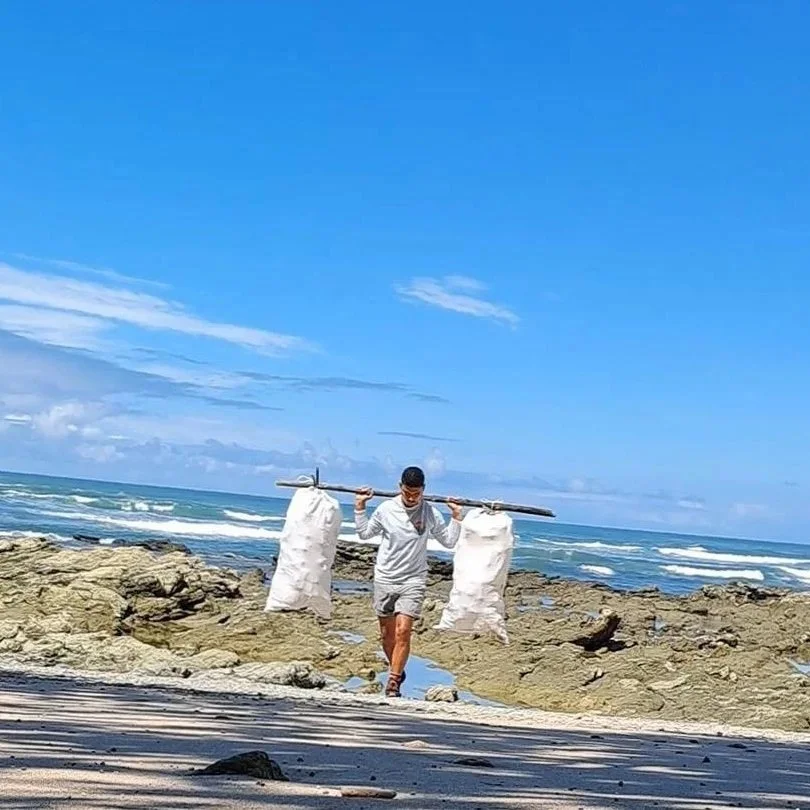
For 3.5 years the team has covered its routes with a quad bike and a cart. Each year brings more partners and volunteers, and more material to move. Transport has become the bottleneck. The project already has three containers with room for more, but can't move material fast enough to fill them.
A Kia Bongo truck, at $25,000, would strengthen the collection routes and make better use of the collectors' time, so the team can collect significantly more.
This project is made possible through collaboration with organizations committed to environmental stewardship and innovative waste solutions.
CRDC
Costa Rican company that developed RESIN8 and opened the first RESIN8 plant with Pedregal
Grupo Pedregal
Construction company transforming plastics into RESIN8®
Paisajes sin Plástico
Costa Rica’s plastic reduction strategy
Nicoya Peninsula Waterkeeper
Grassroots pollution protection nonprofit that leads the project